
Reformer Pilates can feel challenging even when the exercises look simple. That is because each movement may require you to manage resistance, control a moving carriage, maintain balance, and engage several muscle groups at once.
A Pilates reformer machine uses springs, straps, and a moving carriage to create resistance. These features change how your body moves and responds during an exercise.
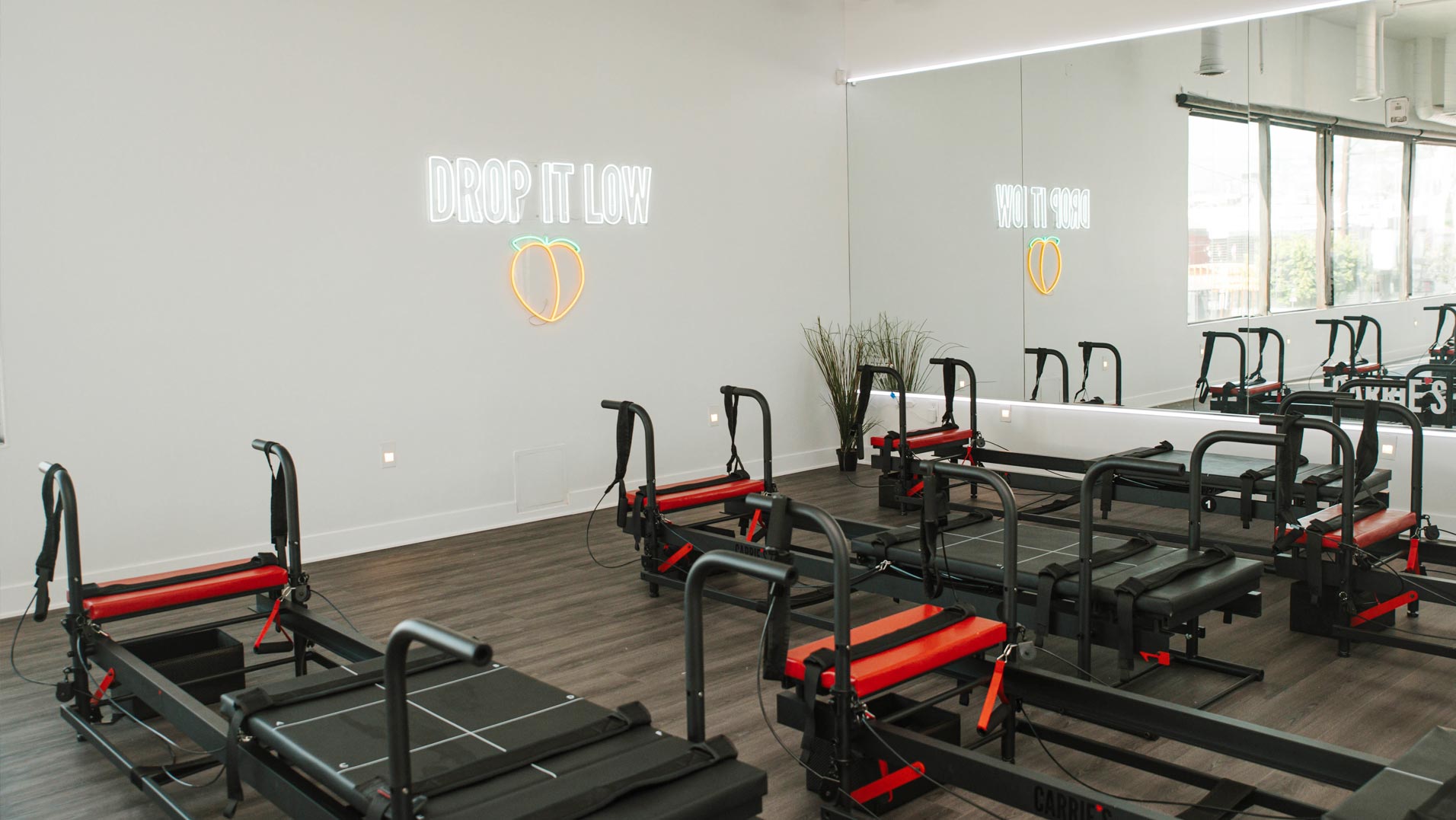
At Carrie’s Pilates West Hollywood, the Transformer is used for dynamic workouts that combine Pilates, strength training, and cardio. The studio’s signature Full Body Burn class combines quick transitions with slow, controlled movements.
The challenge is not always about lifting more weight or doing more repetitions. It often comes from controlling each movement, maintaining proper form, and staying focused throughout the exercise.
Why Can Simple Reformer Pilates Exercises Feel So Difficult?
Reformer Pilates asks you to control your body while working against resistance.
Even a small movement can require effort from your core, arms, legs, and stabilizing muscles. At the same time, you must control the equipment and maintain the correct body position.
Several factors contribute to the challenge:
Spring resistance: Springs change how much force you need to apply during an exercise.
Moving carriage: You must control the carriage as it moves in both directions.
Muscle engagement: Several muscle groups may work together during one movement.
Balance and stability: Your body must remain controlled while working against resistance.
Concentration: You need to follow instructions and coordinate your movements.
These demands can make a simple-looking exercise surprisingly challenging.
How Does Spring Resistance Change a Reformer Workout?
Spring resistance is one of the main reasons reformer Pilates feels different from many floor-based exercises.
The springs create resistance as you move the carriage or work with the equipment. Depending on the exercise, this resistance can make a movement more demanding or provide support throughout the movement.
Unlike a basic bodyweight exercise, reformer Pilates requires you to work with the equipment as well as your own body.
How Do the Parts of a Pilates Reformer Affect Exercise Difficulty?
Different components change how an exercise feels and how you perform it.
Reformer component | How it affects the exercise |
|---|---|
Springs | Provide resistance and change the effort required |
Moving carriage | Requires control and coordination |
Straps and loops | Allow resistance-based arm and leg movements |
Footbar | Provides support for certain exercises |
Shoulder rests | Help position the body during selected movements |
Each component gives the instructor more options when adjusting an exercise.
Do Heavier Springs Make Reformer Pilates Harder?
Not always. More resistance can increase the demand during some exercises, but lighter resistance can also be challenging when a movement requires greater control.
The right setting depends on the exercise, your experience, and your ability to maintain proper form.
For beginners, learning how to control the equipment is more important than choosing the heaviest resistance.
Why Does the Moving Carriage Require So Much Control?
The moving carriage is another reason reformer Pilates can feel harder than it looks.
The carriage responds to the force you apply and the resistance created by the springs. You need to control its movement as you push it away and guide it back.
This requires more than simply completing the exercise.
You must coordinate your body position, muscle engagement, and movement speed while keeping the carriage under control.
Even a slow exercise can feel demanding when you maintain that control throughout each repetition.
Why Can Slow Pilates Movements Feel More Challenging?
Fast movements can make a workout feel intense, but slow movements create a different type of challenge.
Moving slowly gives you less opportunity to rely on momentum. Instead, you must maintain control throughout the exercise.
A slow repetition may require you to:
Keep your muscles engaged.
Maintain your body position.
Control the carriage.
Work against spring resistance.
Coordinate your breathing.
Return to the starting position with control.
This is why a small movement can require significant effort.
Why Does Proper Form Matter More Than Speed?
Proper form helps you perform an exercise with greater control and awareness.
During reformer Pilates, you may need to pay attention to several things at once:
Body alignment
Spring resistance
Breathing
Range of motion
Muscle engagement
Balance
Carriage movement
When these elements work together, an exercise can require considerable concentration.
At Carrie’s Pilates West Hollywood, instructors guide participants through the movements and provide modifications when needed.
Why Do Small Movements Work Multiple Muscle Groups?
A reformer exercise may appear to target one area of the body, but other muscles often help maintain your position.
For example, a leg exercise may also require your core muscles to help stabilize your pelvis. An arm exercise may require your legs and trunk to remain steady while your arms work against resistance.
This is part of what makes reformer Pilates different from simply moving a limb through a range of motion.
How Do Stabilizing Muscles Add to the Challenge?
Stabilizing muscles help your body maintain position while you move.
Their role may become more noticeable when:
The carriage moves slowly.
You work against spring resistance.
Your body must remain balanced.
Your arms and legs move at the same time.
You must hold a particular position during an exercise.
These demands can make an exercise challenging without requiring large or fast movements.
How Does a Pilates Machine Change the Workout?
A Pilates machine provides resistance, support, and different movement options within the same workout.
The Carrie’s Transformer used at Carrie’s Pilates West Hollywood features a variable tension spring system, adjustable-length pull cables, a moving carriage, and rotating handlebars.
These components allow instructors to vary exercises and adjust the challenge.
Which Factors Can Make a Reformer Exercise More Difficult?
Several adjustments can change how an exercise feels.
Training factor | Possible effect |
|---|---|
Spring tension | Changes the resistance |
Body position | Changes balance and muscle demands |
Cable or strap position | Changes the direction of resistance |
Movement speed | Changes the level of control required |
Range of motion | Changes how far you move during the exercise |
Exercise variation | Changes the coordination and strength demands |
An instructor can use these adjustments to modify exercises for different experience levels.
The goal is not to make every movement harder. It is to find an appropriate level of challenge while maintaining control.
Why Does Reformer Pilates Require Strong Body Awareness?
Body awareness means understanding where your body is positioned and how it moves.
This matters during reformer Pilates because several actions may need to happen at the same time.
You might need to maintain your spine position, relax your shoulders, control the carriage, and coordinate your breathing while following the instructor’s cues.
How Can You Improve Control During Each Repetition?
Focus on the quality of each movement rather than how many repetitions you complete.
Try to:
Start in the correct position.
Listen to the instructor’s directions.
Move at the recommended pace.
Keep your body stable.
Maintain steady breathing.
Return to the starting position with control.
You do not need to rush through an exercise. Learning to move with control is an important part of the process.
Can Fast Transitions Make a Pilates Workout More Challenging?
Yes. The difficulty of a reformer workout does not come only from individual exercises. Transitions between movements can also require concentration and coordination.
Carrie’s Pilates West Hollywood uses its Transformer equipment for workouts that combine quick transitions with slower, controlled movements.
This creates a varied pace throughout the class.
What Should Beginners Know About Fast-Paced Classes?
Quick transitions can be challenging when you are still learning how the equipment works.
Beginners may need extra time to understand the setup, position their bodies, and follow instructions.
If you are new to Carrie’s Pilates, let your instructor know before class. Ask questions if you are unsure how to position the equipment or perform a movement.
Carrie’s recommends that first-time clients arrive early so they can become familiar with the Transformer and discuss form with the instructor.
You can focus on learning the movements before worrying about keeping pace with more experienced participants.
Is Reformer Pilates Hard for Beginners?
Reformer Pilates can feel challenging at first because you are learning both the exercises and the equipment.
However, beginners do not need to perform advanced movements to get started.
Learning basic positions, understanding spring resistance, and controlling the carriage can help you become more comfortable with the machine.
How Should Beginners Approach Reformer Pilates?
Start by focusing on technique rather than intensity.
During your first classes, concentrate on:
Learning the equipment.
Understanding the basic movements.
Following instructor cues.
Maintaining proper form.
Asking for modifications when needed.
Carrie’s Pilates instructors help new clients learn the Transformer and provide guidance on form and exercise modifications.
As you become more familiar with the equipment, you can work with your instructor to find an appropriate level of challenge.
How Is Reformer Pilates Different From Mat Pilates?
Mat Pilates and reformer Pilates both use controlled movements, but they rely on different forms of resistance and support.
Mat Pilates primarily uses body weight and the floor. Reformer Pilates adds equipment such as springs, a moving carriage, and straps.
These differences create different movement demands.
Mat Pilates | Reformer Pilates |
|---|---|
Primarily uses body weight | Uses body weight and equipment-based resistance |
Uses the floor for support | Uses a moving carriage and other equipment components |
Relies on mat-based exercises | Offers a wider range of equipment-based movements |
Changes difficulty through exercise variations and body position | Can also change difficulty through resistance and equipment setup |
Neither format is universally harder for everyone. The level of challenge depends on the exercises, the person performing them, and how the workout is structured.
Reformer Pilates offers additional options for adjusting resistance and body position. Some exercises use the equipment for support, while others require you to control movement against resistance.
What Can You Expect at Carrie’s Pilates West Hollywood?
Carrie’s Pilates West Hollywood offers workouts built around the Carrie’s Transformer and the studio’s Pilates and Cross Training approach.
The signature Full Body Burn class is a 45-minute workout that combines Pilates with strength training and cardio elements.
The class format includes quick transitions and slow, controlled movements. Instructors provide guidance on exercise technique and modifications when needed.
If you are new to the Transformer, let the instructor know before class so they can help you understand the equipment and proper form.
Studio: Carrie’s Pilates West Hollywood
Location: West Hollywood, California
For current class details and booking information, visit the studio’s website.
Conclusion: Why Is Reformer Pilates So Challenging?
Reformer Pilates can feel challenging because several demands come together in one movement.
Spring resistance, carriage control, slow movement, balance, coordination, and muscle engagement all influence how an exercise feels.
The size of a movement does not necessarily reflect how much effort it requires. Even a small, controlled movement can be demanding when you maintain proper form and work against resistance.
If you are new to reformer Pilates, focus on learning the equipment and following your instructor’s guidance. You do not need to master every movement in your first class.
At Carrie’s Pilates West Hollywood, the Transformer is part of a workout that combines Pilates, strength training, and cardio. With instructor guidance and practice, you can become more familiar with the equipment and find an appropriate level of challenge.
Frequently Asked Questions About Reformer Pilates
Why does reformer Pilates feel harder than it looks?
Reformer Pilates combines spring resistance with controlled movement. You must manage the moving carriage while maintaining body alignment, balance, and muscle engagement. These demands can make simple-looking movements surprisingly challenging.
Is reformer Pilates suitable for beginners?
Yes. Beginners can learn the equipment and basic movements with instructor guidance. Carrie’s Pilates encourages first-time clients to arrive early so they can become familiar with the Transformer and discuss proper form with the instructor.
Does using heavier springs make reformer Pilates harder?
Not always. More resistance can increase the effort required for some exercises, but lighter resistance can also be challenging when a movement requires greater control or stability. The appropriate resistance depends on the exercise and your experience.
How does reformer Pilates differ from mat Pilates?
Mat Pilates primarily uses body weight and the floor. Reformer Pilates adds springs, a moving carriage, straps, and other equipment components. These features create additional options for adjusting resistance and body position.
Why are slow reformer Pilates movements so challenging?
Slow movements reduce the opportunity to rely on momentum. You must control the movement throughout the repetition while maintaining your body position and working against resistance.
What muscles do you use during reformer Pilates?
The muscles involved depend on the exercise. A movement may target the legs, arms, or core while other muscles help stabilize the body. Your instructor can explain which muscle groups are involved in a particular exercise.
What makes the Carrie’s Transformer different from a traditional reformer?
The Carrie’s Transformer has its own equipment design, including a variable tension spring system, adjustable-length pull cables, 360° rotating handlebars, and a frictionless rolling carriage. Carrie’s uses the Transformer as part of its Pilates and Cross Training workout method.
What can I expect from Carrie’s Pilates West Hollywood?
Carrie’s Pilates West Hollywood offers workouts using the Carrie’s Transformer. Its signature Full Body Burn class is a 45-minute session that combines Pilates, strength training, and cardio elements. Instructors provide exercise guidance and modifications when needed.